
Cellar
How to Store Wine at Home
Cool, dark, still and steady: a practical guide to keeping wine at home, how long bottles last, and how to look after one you have opened.
Glacier Rock Vineyard · · 4 min read

Plenty of kitchens keep a few bottles in a rack on top of the refrigerator. It is a handy spot and a poor one: warm, often bright and close to a humming compressor. Wine does not ask for much. It wants to be cool, dark, still and steady, and nearly every home has a better place to offer.
Cool, dark and still
Temperature matters most. The classic target is about 55°F (13°C), and steadiness counts as much as the number itself. When a bottle warms and cools again and again, the cork can expand and contract, which can let oxygen in.
A warm spell is not a disaster. Wine Spectator's Dr. Vinny has written that a few months at 68°F (20°C) should be no problem, and that it is when storage creeps up toward 80°F (27°C) that he would start to worry. Heat speeds a wine's aging. Long stretches above 70°F (21°C) can damage its flavor for good, and somewhere above 80°F (27°C), wine starts to cook.
That rules out attics and garages, which heat up and then cool sharply, along with sunny windowsills and spots near the oven, a radiator or a heating vent. A parked car on a summer afternoon is worse still. A closet or a cool corner of the basement usually does far better.
If you are unsure about a spot, leave an inexpensive thermometer there for a few weeks in summer and again in winter. A place that stays cool and changes slowly is worth more than one that touches 55°F (13°C) only some of the time.
Light is the next concern. Ultraviolet light can leave wine "light struck," a fault that brings skunky, cooked-cabbage or struck-match smells. Whites, rosés and sparkling wines are the most vulnerable, especially in clear glass. Tinted glass filters out most of the harmful wavelengths, and the tannins in red wine offer some protection. A closed closet, or even a cardboard box, keeps bottles in the dark.
Vibration is less understood. There is little agreement on how much it harms wine, but it can stir up the sediment in a bottle that has thrown some, and it certainly does no good. Keep wine away from washers, dryers and other machines that shake.
Corks, screw caps and time
Corks need a little care. Store corked bottles on their sides, so the wine keeps the inner end of the cork wet; a cork that dries out can shrink and let air in. The outer end depends on the air in the room. Wine Spectator puts the ideal humidity around 70 percent and considers anything from 50 to 80 percent safe, but in most homes, keeping bottles on their sides takes care of it. Screw caps need no moisture at all, so screw-capped bottles can stand upright.
Not every bottle is meant to wait. Most wine today is made to drink well when it is released, and Dr. Vinny's rule of thumb is that these drink-now wines should keep tasting good for another three to five years. Some wines do improve over a decade or more, but they are the exception, and they need cool, steady conditions to get there. When in doubt, open a bottle a little early rather than a little late.
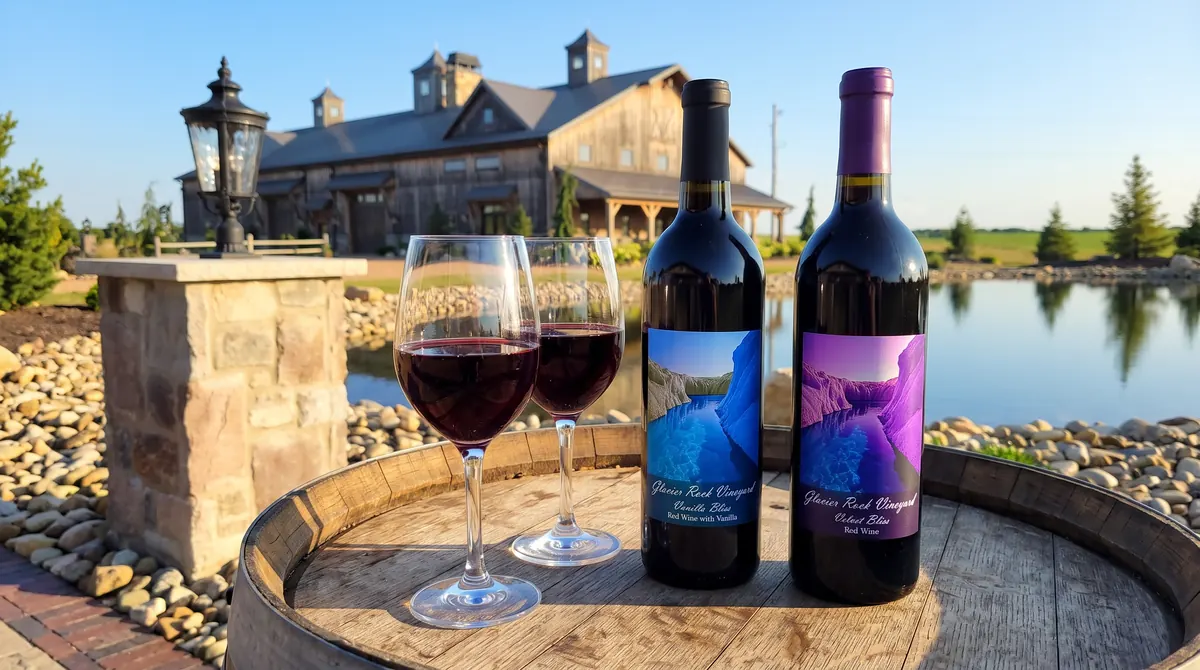
If you are keeping a bottle of Velvet Bliss or Vanilla Bliss, both dry Sangiovese from the 2023 vintage, the same principles apply.
Opened bottles, fridges and closets
Air begins to change a wine as soon as the bottle is opened. Put the cork or cap back in, or use a stopper, and keep the bottle in the refrigerator, reds included, since cold slows oxidation. Take a red out a little while before pouring so it can warm up. Moving the rest into a smaller bottle, with less air above the wine, also helps. As a rough guide from Wine Folly:
- Sparkling wine: one to three days in the refrigerator with a sparkling-wine stopper.
- Light whites and rosés: about five to seven days in the refrigerator.
- Fuller whites: three to five days in the refrigerator.
- Reds: three to five days, in the refrigerator or another cool, dark place.
- Fortified wines such as Port and Sherry: up to about four weeks.
If a bottle will not be finished in time, the last of it can still go into a pan sauce or a pot of something braising.
For unopened bottles you plan to drink within a few months, a dark closet away from heat and vibration works well. A kitchen refrigerator is fine for days or weeks but not for the long haul. It runs in the high 30s to low 40s°F (about 3 to 6°C), colder and drier than wine prefers, and over more than a couple of months a cork can begin to dry out. Some bottles come through a year in the refrigerator unharmed, but it is a gamble.
A wine refrigerator solves most of these problems at once. Units built for wine are designed to hold a steady temperature between 50 and 60°F (10 and 16°C) and to keep the air more humid than a kitchen refrigerator does. If you keep more than a few bottles, or plan to hold any of them longer than a year, one is worth considering. If yours has a glass door, keep it out of direct sun.
Whatever you choose, the rules stay the same: cool, steady, dark, still, and on its side if it has a cork.
Sources
- Is It More Important to Control Temperature or Humidity in My Wine Cellar? (Wine Spectator)
- Should I Store Bottles of Wine Upright or on Their Sides? (Wine Spectator)
- Is Sunlight Bad for All Wines? (Wine Spectator)
- How Long Can I Keep Wine in a Kitchen Refrigerator? (Wine Spectator)
- How Long Does an Open Bottle of Wine Last? (Wine Folly)