
Grapes
Sangiovese, Explained
Where Italy's most planted wine grape comes from, what it tastes like, why it shines at the table, and where it grows beyond Tuscany.
Glacier Rock Vineyard · · 4 min read
Chianti Classico, Brunello di Montalcino and Vino Nobile di Montepulciano come from different corners of Tuscany and answer to different rules. Pour them side by side, though, and you are tasting the same grape at the heart of all three. That grape is Sangiovese, the most widely planted wine grape in Italy.
It rewards a little background. Once you know what Sangiovese is supposed to taste like, and why, a whole shelf of Italian wine starts to make sense.
A Tuscan grape with deep roots
Sangiovese's heartland is central Italy, above all Tuscany and neighboring Romagna, and the two regions have long disputed which can claim it as its own. The earliest written record of the grape in Tuscany dates to 1590, when the Florentine agronomist Giovan Vettorio Soderini mentioned a vine he called Sangiogheto.
Its family tree reaches farther south than you might expect. In 2007, a DNA study published in the journal Vitis identified Sangiovese's parents as Ciliegiolo and Calabrese di Montenuovo, a little-known variety from Campania thought to have been brought there from Calabria, at the toe of Italy's boot.
The name is a puzzle. The story you will hear most often traces it to the Latin sanguis Jovis, "the blood of Jupiter," a fitting image for a red wine. The vine database maintained by the University of Pisa treats that as myth and notes a plainer possibility: giogo, the Italian word for a yoke, which can also mean a ridge of hills. Nobody knows for certain, and the uncertainty is part of the charm.
Three famous names, one grape
Chianti Classico comes from the hills between Florence and Siena, a zone whose boundaries were set in 1716 by Cosimo III de' Medici, Grand Duke of Tuscany. Today the rules call for at least 80 percent Sangiovese, and the wine is identified by its black rooster, the Gallo Nero. Riserva bottlings must age at least 24 months before release, and Gran Selezione at least 30.
Brunello di Montalcino is made only from Sangiovese, which locals in Montalcino call Brunello. The rules require at least two years in oak, and the wines tend to be among the grape's deepest and most structured. The same vineyards also give Rosso di Montalcino, a younger, fresher wine that can reach the market on September 1 of the year after the harvest.
Vino Nobile di Montepulciano must be at least 70 percent Sangiovese, known in Montepulciano as Prugnolo Gentile. A common point of confusion: Montepulciano here is a town. Montepulciano d'Abruzzo is another wine altogether, made from a different grape that happens to share the name.
What's in the glass
Sangiovese is thin-skinned and naturally low in the pigments that color red wine, so a glass is often more ruby than inky. The signature aromas are red cherry and savory herbs. A good Chianti Classico might show a bright cherry core with a scrubby, herbal edge of thyme, juniper and cypress, the scents of the Tuscan macchia, or wild hillside brush. Dried oregano, spice and a faintly roasted, savory note often join in.
Where it grows matters enormously. Sangiovese ripens relatively late and mutates readily; Italy's national registry lists more than 100 clones. Altitude, sun exposure and the weather of a given year all shape what ends up in the bottle.
Structure is the other half of the story. Sangiovese is a high-acid grape with fairly firm tannins, and the best wines keep the two in balance. Darker, more powerful versions such as Brunello lean toward dried fruit, tea leaf and licorice, with tannins to match.
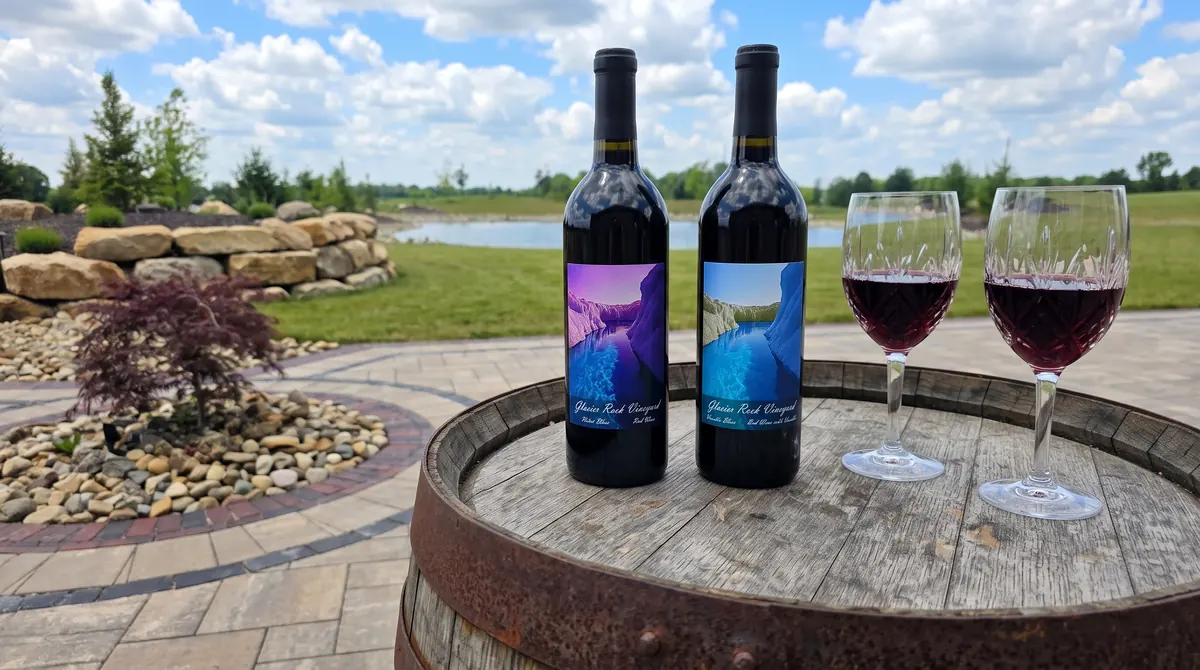
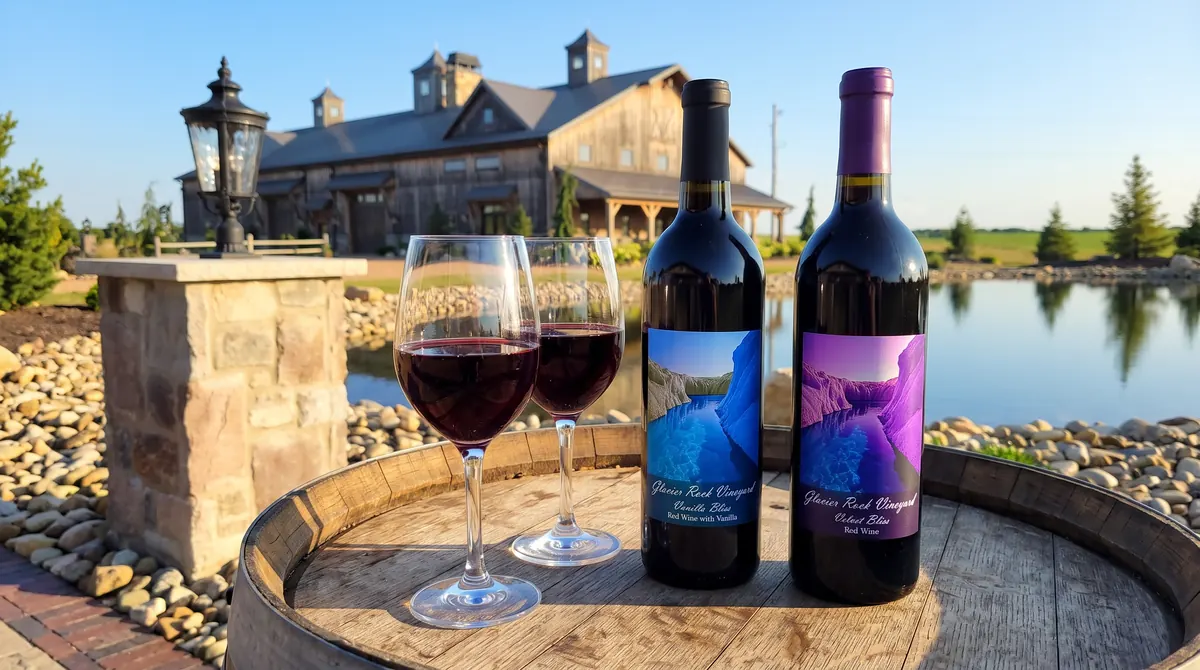
Glacier Rock's two wines are both dry Sangioveses from the 2023 vintage. Velvet Bliss brings bright red cherry, wild herbs and a hint of baking spice, with a surprisingly soft, velvety-smooth finish. Vanilla Bliss wraps rich, toasted vanilla around a dark cherry core, with a creamy mouthfeel and a luxuriously sweet aroma, though the wine itself is dry.
That combination of acidity and tannin is why Sangiovese is such good company at dinner. Acidity keeps the wine tasting fresh beside foods that are tart themselves, and tomatoes are the classic example; the Wine & Spirit Education Trust lists Sangiovese among the high-acid reds it suggests for pizza and tomato-sauced pasta. Tannin, meanwhile, softens in the presence of salt and fat, so a well-seasoned steak or a wedge of aged cheese takes the edge off a young, firm bottle.
Beyond Tuscany
Sangiovese travels, though it often picks up a new accent away from home. On Corsica, where it goes by Niellucciu, it is the island's leading grape and the backbone of the Patrimonio appellation.
Italian immigrants brought Sangiovese to California in the late 19th century, where it went into their mixed field blends. A wave of enthusiasm for Italian varieties in the late 1980s and 1990s pushed the state's plantings to nearly 3,000 acres before interest cooled. California's 2025 grape acreage report counts about 1,340 acres, next to roughly 90,000 acres of Cabernet Sauvignon, so a California Sangiovese is still something of a find.
Argentina grows the grape mostly in Mendoza. In Australia, Penfolds planted trial vines in the Barossa Valley in the early 1970s, and Victoria's King Valley has since become one of the variety's strongholds there.
The best way to learn Sangiovese is to taste it in more than one accent: a Chianti Classico beside a Brunello, or a Tuscan bottle beside one from California or Australia. Notice what they share and where they part ways. The first tells you about the grape; the second tells you about the places it calls home.
Sources
- Sangiovese: general information, VitisDB, University of Pisa
- The parentage of 'Sangiovese', the most important Italian wine grape, Vitis (2007)
- Production Code 2023, Consorzio Vino Chianti Classico
- Chianti Classico: Past, Present, and Future, GuildSomm
- California Grape Acreage Report, 2025 Crop, CDFA and USDA NASS