
Pairing
Why Tomatoes Love Sangiovese: Pairing Food with Italy's Great Red
How acid, tannin, herbs and salt explain Sangiovese's way with food, plus the classic Italian matches and the few dishes that work against it.
Glacier Rock Vineyard · · 4 min read

A ripe tomato is more acidic than its sweetness lets on. The U.S. Food and Drug Administration lists tomatoes at a pH of roughly 4.3 to 4.9, on the acidic side of the scale. Wine is more acidic still. Most wines fall between pH 3 and 4, and reds typically do best at around 3.3 to 3.6. On the pH scale, lower means more acidic.
That shared tartness is the first reason Sangiovese, the grape behind Chianti Classico and Brunello di Montalcino, feels so at home beside a plate of pasta in tomato sauce. It also points to a few principles that are useful well beyond Italian cooking.
Start with what Sangiovese brings: high acidity, fairly firm tannins, red cherry fruit and a savory, herbal edge. Every good match below either leans on one of those traits or softens another.
Four principles that do most of the work
Match acid with acid. Acidic food makes the acidity in a wine seem softer and its fruit more vivid. That is good news for a high-acid wine like Sangiovese, which comes out tasting balanced and bright. A soft, low-acid wine can taste dull and flat beside the same dish. Julie Albin of the Wine & Spirit Education Trust (WSET) put it neatly: "Tomatoes are the epitome of acid and need wines with equal freshness."
Let tannin meet protein and fat. Tannin is what gives a young red its grippy, drying feel on your gums. Proteins and fats bind with tannins and mute that astringency, which is why a firm red tastes smoother beside a steak than on its own. The effect runs both ways. In a 2012 study, scientists at the Monell Chemical Senses Center found that sips of a mildly astringent drink cut the slippery feel of fat when tasters ate dried meat. The wine refreshes the palate after the fat, and the fat smooths the wine.
Echo the herbs. Sangiovese has a savory, herbal streak, often described as thyme, dried oregano and wild hillside brush. Food cooked with the same kinds of herbs gives those notes something to answer. Think rosemary on a roast, sage with pork or white beans, or oregano on a pizza.
Mind the salt. WSET teaches that salt in food softens a wine's bitterness and acidity and makes it seem fuller, so a slice of prosciutto or a shaving of aged pecorino can make a young Sangiovese seem rounder. A squeeze of lemon and a drizzle of olive oil push in the same direction, taking the edge off a wine with plenty of acid and tannin.
Classic matches from the Italian table
Each of these classics puts the principles to work, and none of them asks for anything fussy.
- Tomato sauces. A long-simmered ragù or a simple marinara meets the wine's acidity head-on, and a grating of hard cheese adds salt to soften its grip.
- Wood-fired pizza. Tomato, salty cheese, a little char and a scattering of herbs. A Margherita or a sausage pie checks nearly every box at once.
- Bistecca alla fiorentina. Florence's famous steak is a T-bone more than an inch thick, cut from the loin of a young steer, often of the Chianina breed. It is grilled until browned outside and rare within, then salted and finished with olive oil and pepper. Salt, fat and protein, all on one plate.
- Salumi. Prosciutto, salami and other cured meats bring salt, fat and protein in a single bite, which makes them an easy first course alongside a young, firm bottle.
- Roast chicken with herbs. A bird roasted with rosemary, garlic and lemon is lighter than steak, so it suits a fresher, younger Sangiovese better than a powerful Brunello.
- Aged sheep's-milk cheese. Pecorino Toscano is made from whole sheep's milk and comes in a soft style, aged at least 20 days, and a firmer one aged at least four months. The firmer, longer-aged cheese is the one to reach for with a structured red.
Where Sangiovese struggles
Chili heat. Spicy food makes a wine's alcohol feel hotter and its bitterness and acidity more pronounced, while muting its fruit. For a fiery curry or a plate of chili-laced noodles, a low-tannin red or a slightly sweet white is the safer choice.
Sweet dishes. Sugar in food makes a dry wine taste thinner, sharper and more bitter. Enjoy the Sangiovese with the main course, and give dessert a sweet wine of its own.
Delicate seafood. A piece of sole or a plate of scallops has little to stand up to a firm red, and chemistry can work against the match too. When Japanese researchers paired 38 red and 26 white wines with scallops in 2009, the wines highest in iron left the most intense fishy aftertaste. With delicate fish and shellfish, a crisp white is usually the easier choice.
Umami on its own. Mushrooms, soy sauce and other intensely savory ingredients can make a red taste more bitter and less fruity. That doesn't rule them out, since salt softens bitterness, but it does mean those dishes need generous seasoning to stay friendly with a firm red.
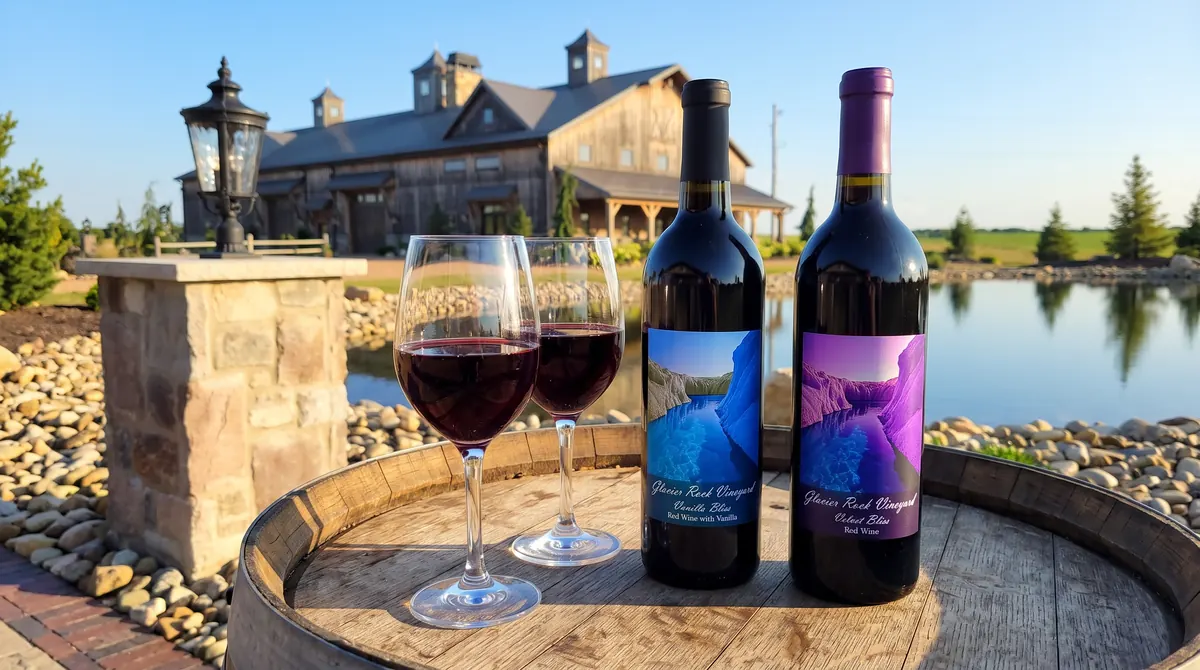
None of this is a rulebook. The best test is your own palate: pour a glass, take a bite, sip again, and notice how the food changes the wine. If you are starting with a Glacier Rock bottle, both Velvet Bliss and Vanilla Bliss are dry Sangioveses from the 2023 vintage.
Sources
- How to pair wine with your favourite takeaway meals, WSET
- Four rules to masterful food and wine pairing, WSET
- Chinese food and wine matching, WSET Level 2, Decanter
- Why wine and tea pair so well with a meal: It's all in the mouthfeel, Cell Press via ScienceDaily
- Scientific Basis The 'Golden Rule' Of Pairing Wines And Foods, American Chemical Society via ScienceDaily