
Serving
To Decant or Not: When Air Helps a Wine
Learn what a decanter really does, which wines gain from air or need pouring off their sediment, and how to decant a bottle calmly at home.
Glacier Rock Vineyard · · 4 min read
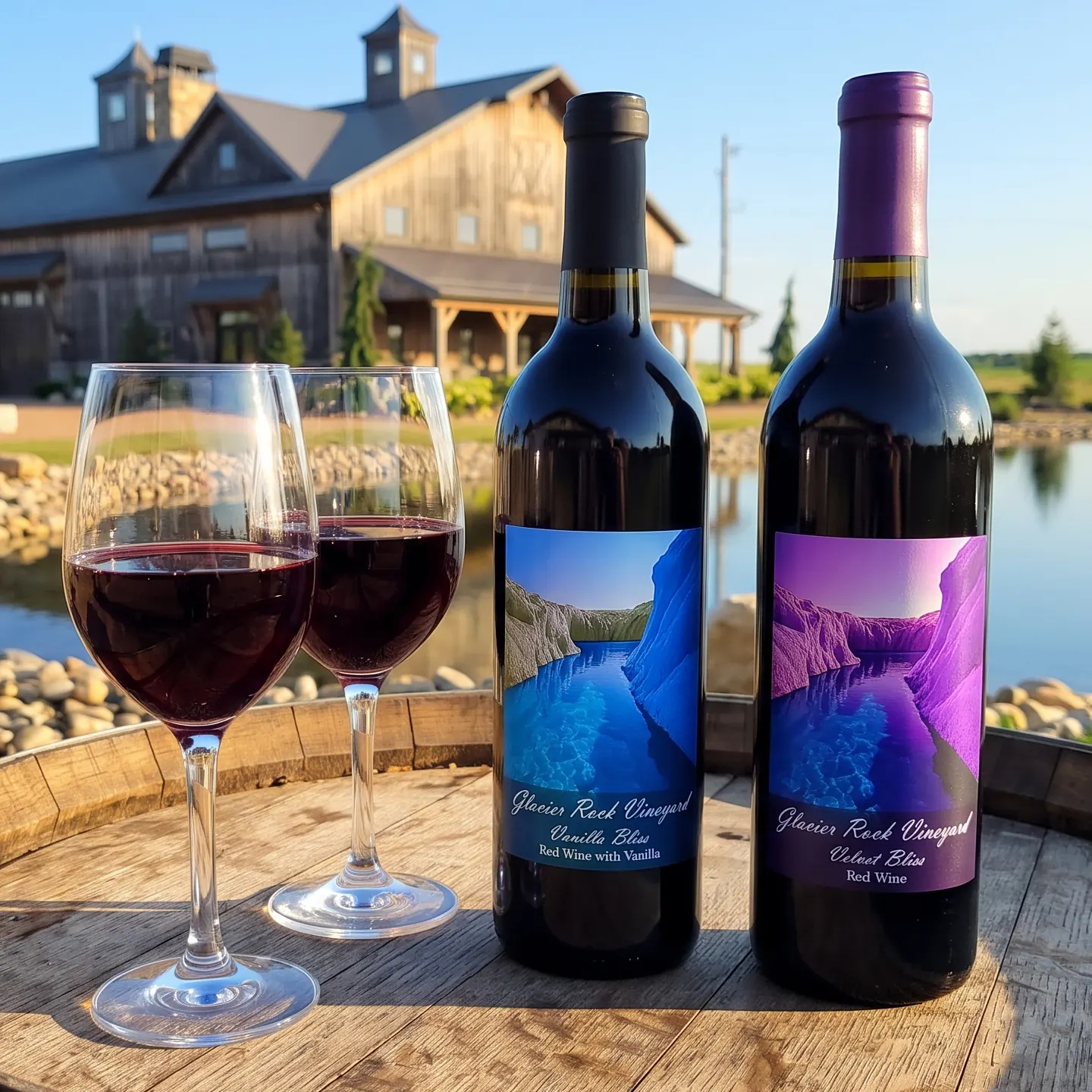
Hold an older bottle of red up to a light and turn it slowly. You may find a dark film along the side where it lay in storage, or a fine deposit at the bottom that clouds the wine as soon as the bottle is jostled. That deposit is one of two good reasons to reach for a decanter. The other is air.
What decanting does
Decanting simply means pouring wine out of its bottle into another vessel, and it does two separate jobs.
The first is clarity. As a red wine ages, the compounds that give it color and tannin slowly link together and drop out of the wine, which is why old reds look paler and leave sediment behind. Wine Spectator's guide to decanting notes that older reds and Vintage Ports produce sediment naturally, while whites rarely do, and that a red will have accumulated some after five to 10 years in the bottle. Stirred up, it clouds the wine and can add bitterness and grit. A careful pour leaves it in the bottle.
The second job is aeration. Pouring the wine into a wide vessel exposes it to air and spreads it out, giving it far more surface than it had in the neck of the bottle. That can help its aromas come forward, and it lets unpleasant volatile notes, such as burnt matches or rubbing alcohol, evaporate and blow off.
Air has limits, though. As Andy Howard MW explains in Decanter, decanting cannot soften tannins, reduce acidity or age a wine ahead of its time. What air changes is mostly aroma, though a youthful red may also seem a little smoother.
Which wines benefit, and which don't
Two kinds of red gain the most. One is a young, structured red that seems closed or quiet when you first pour it. Wine Spectator suggests that a younger, more vigorous, full-bodied red can go into the decanter an hour or more before serving. The other is an older red with sediment, where the goal is a clean pour rather than more air.
Most whites and rosés don't need decanting, and Wine Folly's guide notes that their delicate aromas can simply drift away. The exception is a white with a smoky, struck-match note from reductive winemaking. Decanter suggests seriously considering a decanter for premium whites and for those made in a reductive style. Light reds need only a little air, and sparkling wine is rarely decanted at all.
Very old wines call for the most care. Their aromas can fade quickly once they meet the air, and Decanter's advice is to ask whether an older, more delicate wine really needs decanting at all. If it has sediment, decant it gently and serve it soon. Wine Folly suggests tasting an old wine first: if it is already in balance, put the cork back until you are ready, and if it is not, check on it every so often over half an hour.
How to decant
You don't need anything elaborate. Any clean glass carafe or pitcher you can see through will do the job.
- Stand the bottle upright for 24 hours or more, so the sediment slides to the bottom.
- Rinse the decanter with hot water rather than detergent.
- Remove the foil and cork gently, then wipe the neck of the bottle clean.
- Set a light under the neck. A candle works, and so does a flashlight.
- Pour slowly and steadily, without stopping, and slow down further once you reach the bottom half of the bottle.
- Stop when the sediment reaches the neck, and leave the last ounce or two behind.
With a young wine that has no sediment, you can skip the light and simply pour.
How long to wait, and what to use instead
Taste the wine as soon as it is decanted, then again as it sits. Decanter's advice is to keep checking as it breathes. For a young, full-bodied red, an hour is a sensible start, and if it still seems inexpressive, Wine Spectator suggests giving it another two to three hours or even longer. Wine Folly's rough guide gives light reds 20 to 30 minutes, medium-bodied reds 30 to 60, and the fullest reds an hour or more. Air keeps working on a wine after it is poured, though, and a wine left too long can end up oxidized.
Older wines get the opposite treatment. Wine Spectator advises decanting a fragile or old wine, especially one 15 or more years old, only 30 minutes or so before drinking.
No decanter? Swirling does a smaller version of the same work, since every swirl renews the wine's surface and lets more volatile compounds escape. In a study published in the journal OENO One, researchers found that 30 seconds of swirling significantly reduced the "reductive" off-odors caused by hydrogen sulfide, mainly through evaporation. A large glass helps too, filled only to its widest point so the wine has plenty of surface and room to move. And if you would like to serve from the original bottle, you can double decant: pour the wine off its sediment, rinse the bottle, and pour the wine back in.
When in doubt, pour a little and taste. A wine that seems tight and quiet may welcome the decanter. One that is already open and fragrant is telling you it is ready.
Sources
- Decanting 101 (Wine Spectator)
- Decanting wine: when and how to do it (Decanter)
- What causes both red and white wines to turn brown when aged a very long time? (Wine Spectator)
- Decanting Times: A Handy Guide for Best Practices (Wine Folly)
- Effect of glass swirling on the removal of 'reductive' off-odours caused by H2S in wine (OENO One)